The Art of Film Sound Mixing: Bringing Audio to Life in Screen Projects
When I first walked into a proper mixing studio in Los Angeles, I thought I knew what film sound mixing meant. I had spent years editing dialog in cramped suites, chasing background noise out of scratch tracks, and pretending I understood the difference between a good mix and a bad one. It took sitting behind an Avid S6 console, watching a veteran mix engineer balance a complex scene, to realize how much I had missed. Film sound mixing is not the final polish on an already finished soundtrack. It is the moment where all the separate pieces - dialog, Foley, music, sound design, voiceover - become one coherent, emotionally gripping experience.
What Film Sound Mixing Actually Entails
At its simplest, film sound mixing is the process of combining and balancing every audio element in a screen project into a final stereo or immersive audio master. But that description hides the real work. A mix engineer does not just turn faders up and down. They make hundreds of judgment calls in a single scene. Should the reverb on the voiceover match the echo of the room we see on screen? Does the sound design of a car crash need more low-end compression to feel weighty without overpowering the dialog? How loud should the footsteps be when the character is trying to be quiet but the audience needs to hear them anyway?
These decisions shape how the audience feels. A poorly mixed film can ruin a great performance, while a thoughtful mix can elevate mediocre footage into something memorable. That is why film sound mixing sits at the very end of the audio post-production pipeline. It is where the sound designer, composer, and director all hand over their work and trust the mixer to serve the story.
The Tools of the Trade
Most professional mixers work in a DAW like Pro Tools, often paired with a physical mixing console. Avid has dominated this space for decades, and for good reason. Pro Tools offers the kind of sample-level precision that film projects demand. But the software alone is not enough. A proper studio monitor setup, calibrated to the room, gives the mixer a truthful picture of what the audience will hear. Without accurate monitors, all the equalization and compression in the world is guesswork.
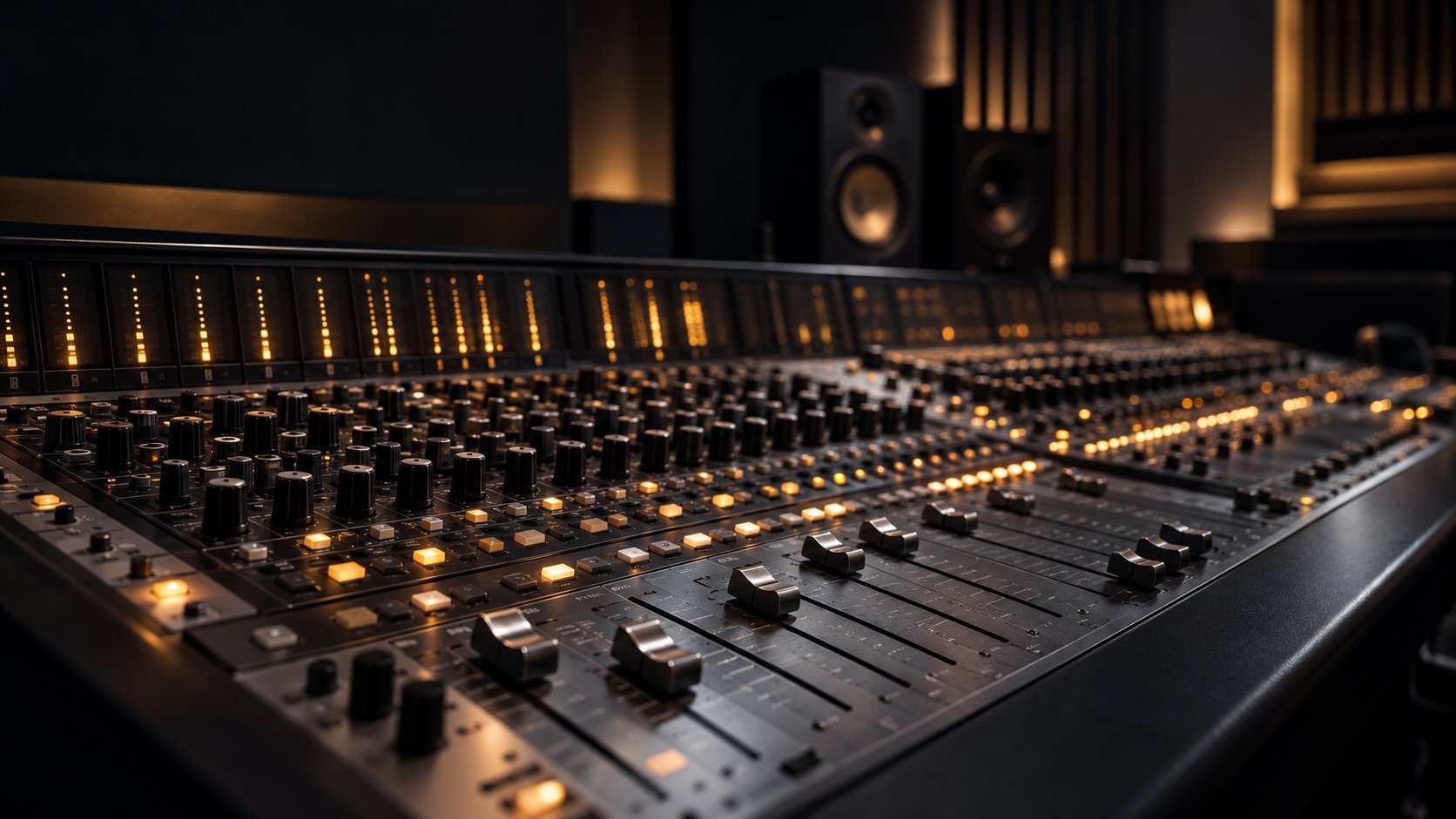
Dolby Atmos has changed the game for screen projects, especially in Los Angeles where many high-end studios have adopted it. Immersive audio lets the mixer place sounds anywhere in a three-dimensional space. A helicopter can fly over the audience, a whisper can come from behind, and rain can surround the listener. But mixing for Atmos requires a different mindset. You are not just balancing levels across left and right. You are building a sound field that moves with the story. It adds complexity, but the payoff is huge when done right.
Dialog, Music, and Sound Design: The Three Pillars
Every film mix is a negotiation between three main elements: dialog, music, and sound effects. The dialog has to be clear. If the audience cannot understand what is being said, the story breaks. That means careful equalization to reduce muddiness, compression to even out volume jumps, and sometimes a touch of reverb to match the room tone. Voiceover work adds another layer. A voiceover track recorded in a dead booth needs to feel like it belongs in the same world as the on-screen dialog. The mixer has to blend them so the listener does not notice the seam.
Music is the emotional driver. A soundtrack can tell the audience how to feel before the actor even speaks. But music can also drown out dialog if it is not mixed carefully. A good mixer knows when to pull the music back during a key line and when to let it swell. This kind of dynamic control is one of the hardest skills to learn. It is not about following rules. It is about feeling the scene and making the music serve the story without dominating it.
Sound design and Foley create the world. Foley artists record footsteps, cloth rustles, door creaks, and glass breaks in sync with the picture. Sound designers build the bigger textures - the hum of a spaceship, the crackle of a forest fire, the distant rumble of traffic. The mix engineer takes all these raw sounds and fits them into the sonic landscape. Too much Foley and the scene feels cluttered. Too little and it feels empty. The balance is everything.
The Reality of Working in Audio Post-Production
Spending time in Los Angeles studios taught me that film sound mixing is rarely glamorous. It is long hours staring at a Pro Tools session, listening to the same ten-second loop until your ears bleed. It is having a director ask for the dialog to be louder, then quieter, then louder again because they are not sure what they want. It is learning how to communicate with people who think in images, not frequencies. A mixer has to be part technician, part diplomat, and part artist.
Commercials and trailers are a different beast. A thirty-second commercial has no time for subtlety. Every sound has to hit hard and fast. The mix needs to grab attention in the first second and hold it until the logo appears. Trailer mixing is even more intense. You are selling the movie in two minutes, so the mix has to be punchy, clear, and dramatic. Big bass, crisp impacts, and voiceover that cuts through everything else. It is a specialized skill within film sound mixing, and it demands a different ear than a feature film does.
For smaller screen projects, the budget might not allow for a full Foley session or a custom score. In those cases, the mix engineer becomes a creative problem-solver. They might layer stock sound effects, use equalization to make a cheap microphone sound better, or add reverb to give a dry recording some life. The principles stay the same. The execution just has to be more resourceful.
Common Misconceptions
One of the biggest mistakes I see beginners make is thinking that louder means better. They push the levels until the waveform looks like a brick and call it a mix. What they get is a flat, fatiguing sound that collapses on anything but high-end headphones. Real film sound mixing is about dynamics. It is about letting quiet moments breathe and big moments hit without distortion. Compression is a tool, not a goal.
Another misconception is that you need expensive gear to start. You do not. You need good monitors, a decent interface, and a treated room. A $10,000 microphone will not fix a bad mix. A $200 microphone in a well-treated room with a skilled mixer can sound incredible. The gear matters, but the ears matter more.
The Future of Film Sound Mixing
Immersive audio formats like Dolby Atmos are becoming standard, not just in theaters but for home streaming. That means mixers need to think about how their work translates across different playback systems. A mix that sounds amazing in a Dolby-certified theater might fall apart on a laptop speaker. Good mix engineers check their work on multiple systems. They listen on studio monitors, headphones, TV speakers, and even phone speakers to make sure the core elements survive.
Remote collaboration has also changed the workflow. Many mixers now work from home studios, sending Pro Tools sessions back and forth with editors and directors across the country. Los Angeles remains a hub, but the work itself is increasingly distributed. That requires discipline in session organization and communication. A messy session can cost hours of troubleshooting.
At the end of the day, film sound mixing is about serving the story. The best mixes are the ones you do not notice. They feel inevitable. The dialog is clear, the music moves you, the sound effects place you in the world, and none of it fights for attention. That invisible craftsmanship is what separates a professional mix from an amateur one. It takes years of practice, a lot of bad mixes, and the humility to keep learning. But when it clicks, there is nothing like hearing your work in a theater and knowing you helped make the story come alive.